15° Fine Edge
A more acute angle for thinner blades designed around a finer edge geometry.
Restore and refine kitchen-knife edges with a rolling diamond system, fixed 15°/20° AngleLock™ guidance and a magnetic holder that keeps the blade steady.

KatuSharp is a rolling knife sharpener designed to make consistent edge maintenance easier than freehand sharpening. The magnetic base supports the blade while the roller follows the edge, helping keep the sharpening angle steady from heel to tip.
The reversible diamond disc combines two stages in one tool. The 400# side is the coarser surface for restoring a dull or neglected edge, while the 1000# side refines that restored edge to a smoother working finish.
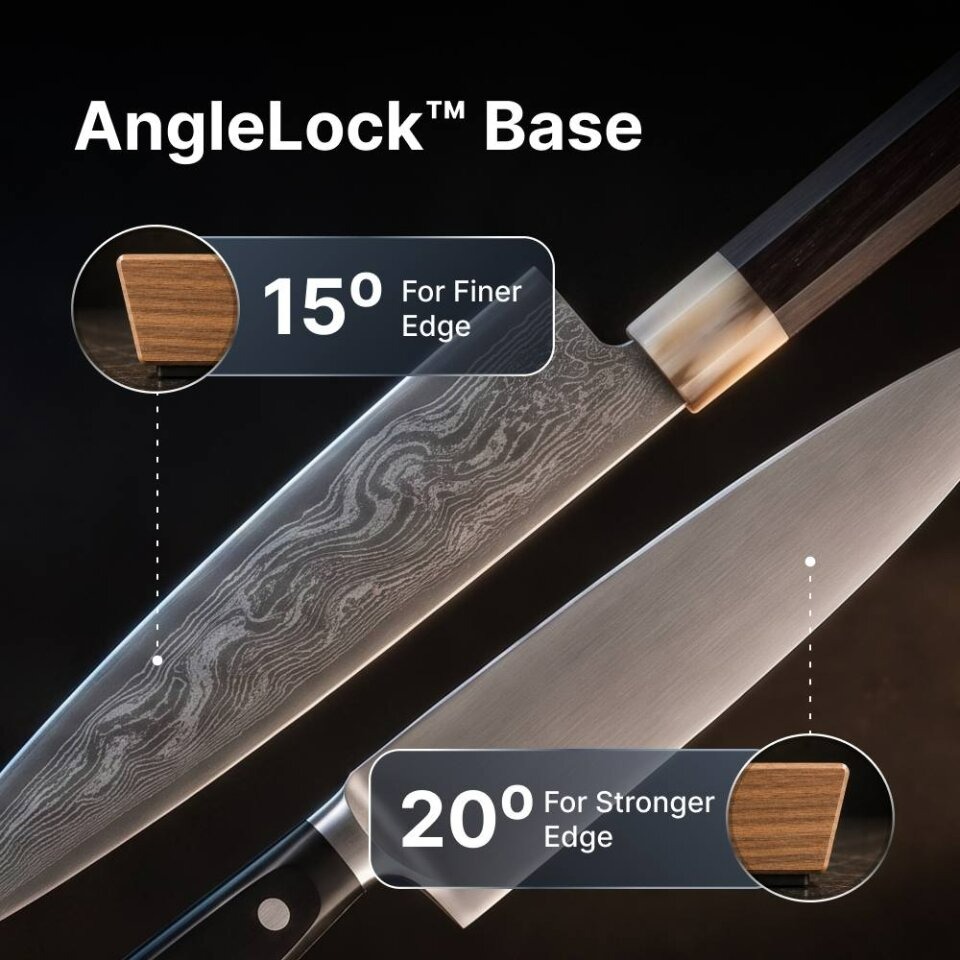
AngleLock™ gives you two fixed positions: 15° for a finer, more acute edge and 20° for a sturdier everyday edge. The right choice depends on the knife’s original geometry, so the goal is to match the blade rather than force every knife to the same angle.
KatuSharp works dry. Industrial diamond abrasive removes steel without soaking a stone or applying honing oil, which keeps setup simple and makes quick touch-ups easier to fit into normal kitchen maintenance.
The sharpener combines solid oak, aluminum alloy, N45 magnets and a replaceable diamond disc. It is intended for a broad range of steel kitchen knives, including softer Western-style blades and harder Japanese-style steels, while special blade types should follow their own sharpening requirements.
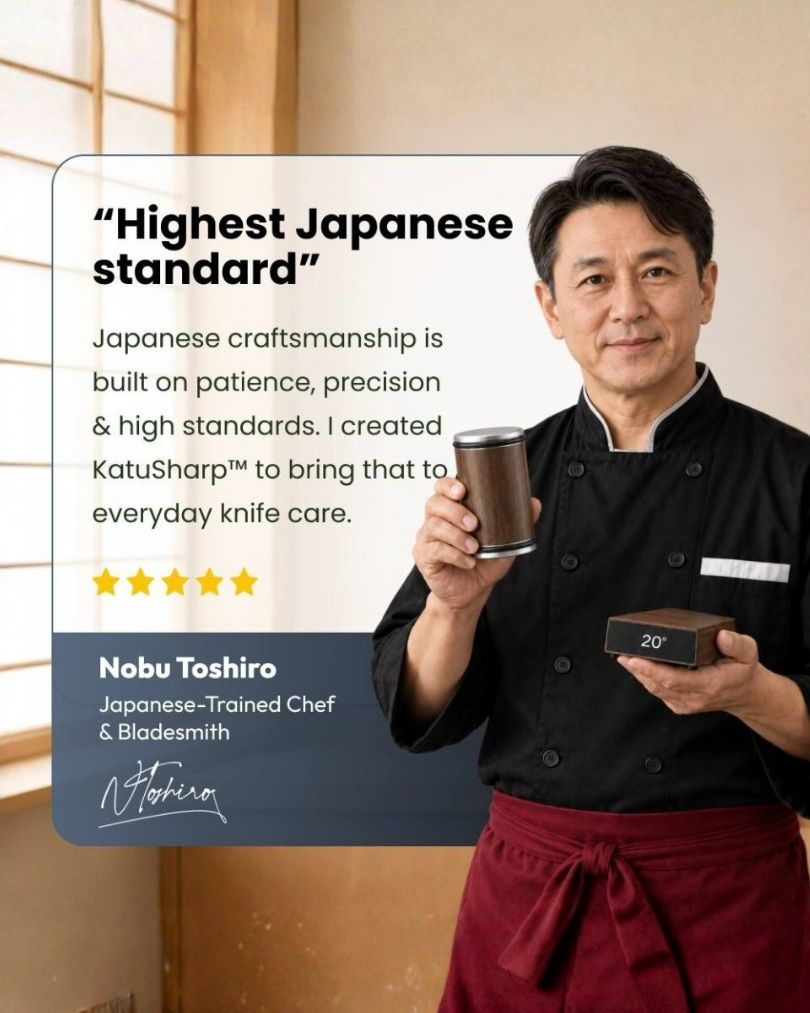
KatuSharp Availability
Check the current KatuSharp Rolling Knife Sharpener offer and purchase availability for United States.
Start with the 400# side when the edge is dull, rounded or needs more material removed. Roll the sharpener smoothly from heel to tip while the blade remains seated against the magnetic AngleLock™ base.
Once the edge has been restored, turn the reversible disc 180° to the 1000# side. This finer grit removes the rougher scratch pattern left by the coarse stage and refines the edge for normal kitchen cutting.
The number of passes depends on the condition, steel and geometry of the knife. A lightly dulled blade may need only a short touch-up, while a neglected edge can require more rolling before moving to the finer side.
Freehand stones require you to hold a sharpening angle manually through every pass. KatuSharp moves that task to the base: the knife rests against a fixed 15° or 20° magnetic face while the roller travels along the edge.
The 20° position creates a more robust edge profile and is a practical starting point for many everyday Western kitchen knives. The 15° position creates a finer, more acute edge and is better suited to thinner blades designed around that geometry.
Once you choose the angle that matches a knife, use the same angle consistently for future maintenance. If you are unsure of the original edge geometry, check the knife maker’s guidance before sharpening.
A more acute angle for thinner blades designed around a finer edge geometry.
A sturdier angle suited to many everyday kitchen knives and general prep work.
N45 magnets help hold the blade flat against the selected AngleLock™ face while you roll.
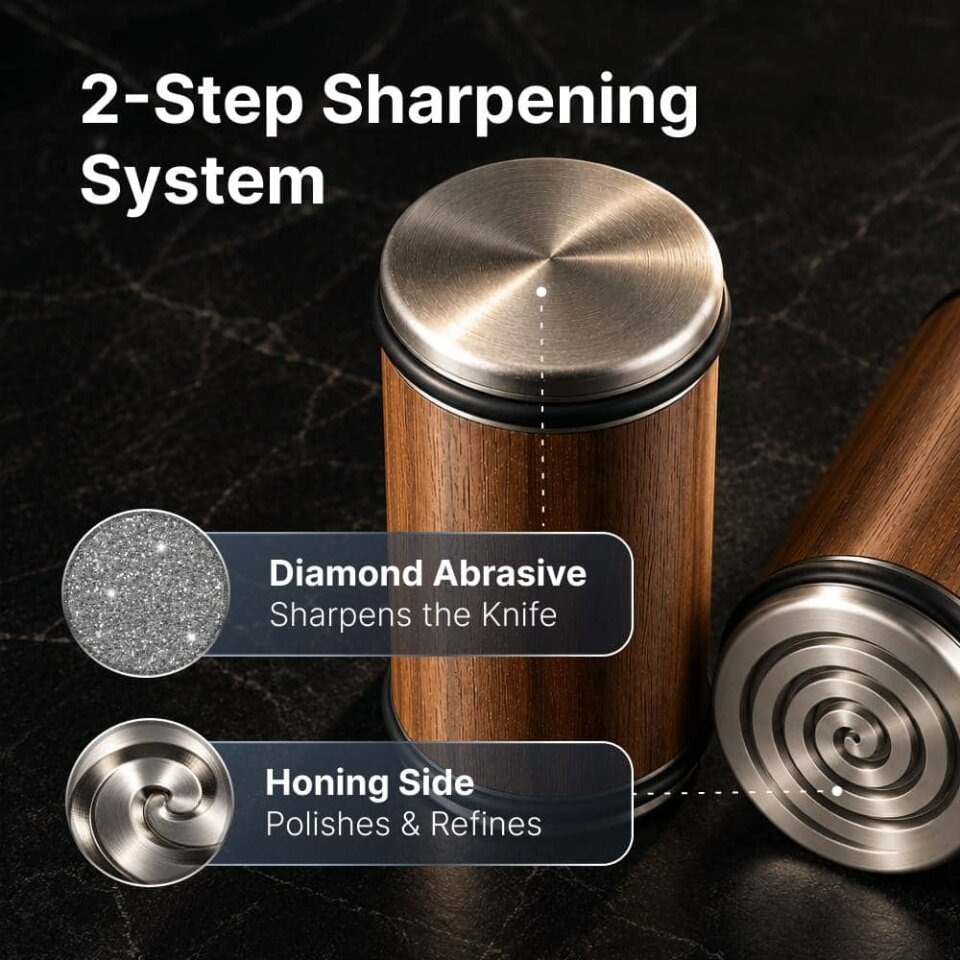
The industrial diamond disc is intended to work across a broad range of steel hardness, from many Western chef’s knives to harder Japanese-style steels. The two grit stages let you adjust the process to the condition of the edge instead of using one surface for every task.
KatuSharp is not presented here as a universal solution for every blade geometry or material. Serrated blades, single-bevel knives, ceramic blades and other specialty designs may need a different method or specific manufacturer guidance.
Maintain common kitchen workhorses with guided 15° or 20° sharpening.
Use the angle that matches the knife’s existing edge geometry.
Restore and refine plain-edge steel utility knives used in daily prep.
Use controlled rolling passes on small plain-edge steel blades.
Diamond abrasive can work on harder Japanese-style knife steels.
The system also suits many conventional Western-style kitchen steels.
Place KatuSharp on a stable work surface and keep fingers clear of the cutting edge. Choose the AngleLock™ face that matches the knife, then seat the blade flat against the magnetic holder.
Use the 400# restore side first when the knife is meaningfully dull. Roll from heel to tip with smooth, controlled passes, letting the abrasive do the work rather than pressing excessively.
When the edge is restored, flip the disc to the 1000# refine side and repeat the rolling motion. Check the edge carefully after sharpening and clean away any loose metal residue before using the knife for food preparation.
Choose 15° or 20° and seat the blade flat against the magnetic AngleLock™ holder.
Use the 400# side and roll heel to tip until the dull edge has been restored.
Turn the disc to the 1000# side and repeat with lighter refinement passes.
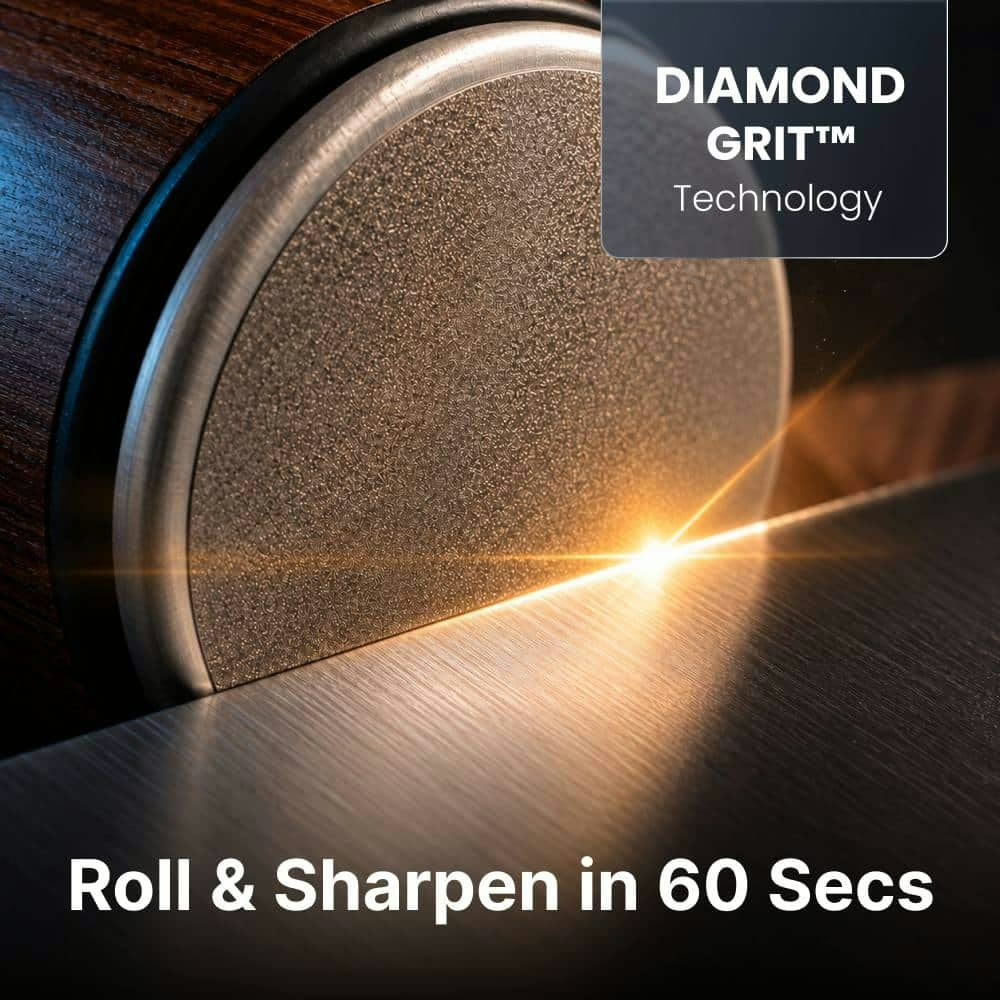
KatuSharp combines the functions that usually require separate sharpening steps: a coarse restoration surface, a finer refinement surface and a fixed-angle holder. The rolling format keeps the motion simple while the base controls blade position.
The body combines solid oak and aluminum alloy, while N45 magnets support the knife during sharpening. The diamond disc is reversible and replaceable, so the abrasive component can be renewed without replacing the complete sharpener.
Sharpening speed and edge longevity depend on the knife, steel, starting condition, cutting surface and how the knife is used. KatuSharp is designed for fast, repeatable maintenance rather than a fixed one-minute result or a fixed number of months between sharpenings.
The kit includes one KatuSharp rolling sharpener with oak and aluminum-alloy construction, an N45 magnetic AngleLock™ base, one pre-installed reversible 400#/1000# diamond disc and an instruction manual.
The diamond system is designed to run dry, so there is no stone to soak and no honing oil to apply. After sharpening, wipe the tool and work area clean and keep the abrasive surfaces free of grease, food residue and loose metal particles.
The diamond disc is replaceable. Inspect it periodically for wear, damage or contamination, and replace the disc when its cutting performance has noticeably declined rather than increasing pressure on the blade.
A rigid combination of solid oak and aluminum alloy supports the rolling mechanism.
The holder uses strong magnets to support the knife against the selected angle face.
One reversible disc covers coarse restoration and fine refinement.
No soaking water or honing oil is required for normal operation.
The diamond disc can be changed when it eventually wears.
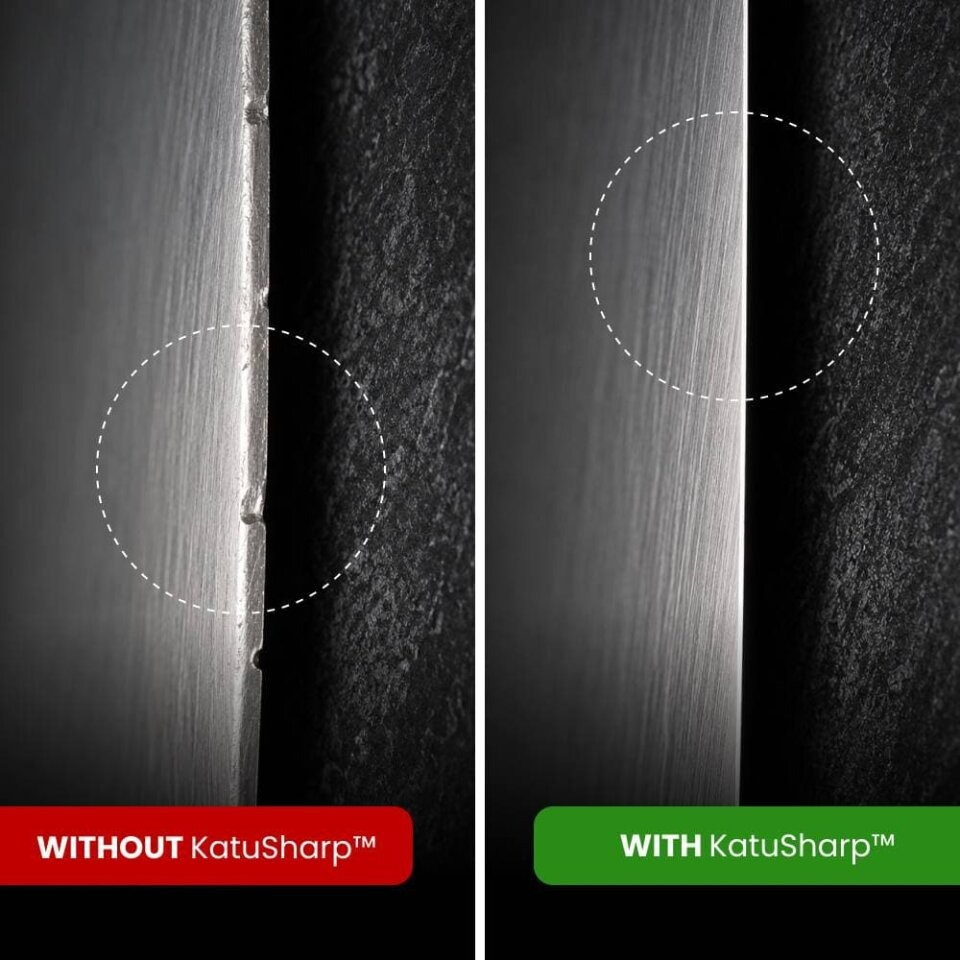
A good result starts with matching the knife’s geometry and using the coarse side only as much as needed. The finer 1000# stage is for refinement, not for repairing a very dull edge.
Start coarse when the edge needs meaningful restoration or has been neglected.
Move to the fine side after the bevel has been restored and the edge is forming consistently.
Once a knife is maintained at 15° or 20°, keep using that same angle unless the blade is intentionally being reprofiled.
Let the diamond abrasive cut; excessive downward force is unnecessary and can make the motion less consistent.
The edge can become very sharp. Handle carefully and remove any loose sharpening residue before food use.
Clear answers about dry diamond sharpening, kit contents, knife compatibility, grit choice, AngleLock™, maintenance and troubleshooting.
KatuSharp uses an industrial diamond abrasive disc that cuts steel dry. Unlike a traditional water stone, the diamond surfaces do not need to be soaked before use. Keep the disc clean and use smooth rolling passes.
The kit includes one KatuSharp rolling knife sharpener with oak, aluminum alloy and N45 magnetic base, one reversible 400#/1000# diamond disc pre-installed, and an instruction manual.
It is designed for a broad range of plain-edge steel kitchen knives, including many softer Western-style blades and harder Japanese-style steels. Specialty geometries or materials may require a different sharpening method.
The 400# side is the coarse restoration stage for dull or neglected edges. The 1000# side is the finer stage used after restoration to refine the edge to a smoother working finish.
Disc life varies with frequency of use, steel hardness and how much material is removed. The disc is replaceable, so a worn abrasive can be changed without replacing the entire sharpener.
Choose 15° or 20° on the AngleLock™ base and seat the flat side of the blade securely against the magnetic holder. Keep the blade stable while the roller moves along the edge.
No freehand sharpening skill is required. The fixed-angle base handles the angle reference, while you guide the roller from heel to tip using smooth, controlled passes.
Use the angle that matches the knife’s intended edge geometry. 20° gives a sturdier everyday edge, while 15° creates a finer, more acute edge for blades designed around that profile.
No. The diamond disc is used dry, so there is no stone to soak and no honing oil to apply. Keep the abrasive clean and the work surface stable.
Make sure you are using the 400# side if the edge is still dull, confirm that the blade is seated flat against the AngleLock™ base, and add more controlled passes before switching to 1000# refinement.
KatuSharp Availability
Check the current KatuSharp Rolling Knife Sharpener offer and purchase availability for United States.